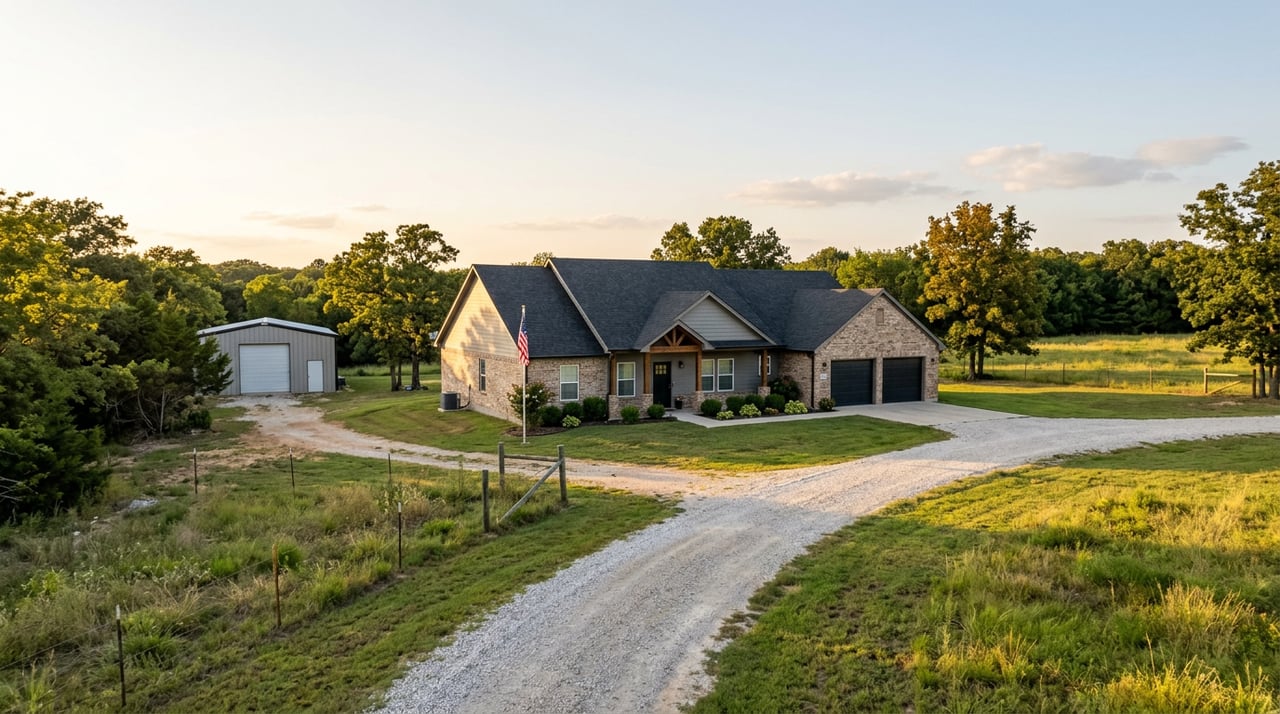
Craving room to breathe without giving up convenience? In Lone Grove, you can find a home on acreage that offers privacy, space for hobbies, and easy access to Ardmore in as little as 7 to 15 minutes depending on location. If you are picturing a pond, a shop, or a few head of livestock, you are not alone. But buying acreage is different from buying a neighborhood lot. You will want to confirm boundaries, access, utilities, and financing early to avoid surprises.
This guide walks you through what matters most when buying a home on acreage in Lone Grove, from surveys and easements to wells, septic, loans, upkeep, and a practical checklist you can use while you shop. Let’s dive in.
Lone Grove acreage at a glance
Lone Grove is a small city in Carter County with a population of about 5,000, set just west of Ardmore. You get a rural feel with quick connections to services and jobs in town. You can review population and area details in the U.S. Census Bureau’s QuickFacts for Lone Grove city, Oklahoma. Explore Lone Grove’s QuickFacts.
Around Lone Grove, you will see a wide range of acreage options. Many listings sit on 1 to 10 acres, and you can also find 20 to 40 plus acre parcels set up for small ranching or hobby farming. Common features include private wells, septic systems, on-site electric, shops or barns, fenced pasture, ponds, and sometimes storm shelters. As you tour, keep an eye on how the home and land actually function together for your goals.
Know your boundaries and access
Get a current survey
With acreage, do not rely on old stakes or a seller’s sketch. Ask for a recent boundary survey by a licensed Oklahoma surveyor. If you are financing or the site has unusual features, your lender or title company may call for an ALTA/NSPS land title survey. These surveys show property corners, recorded easements, rights-of-way, visible utilities, and possible encroachments, which helps title and lenders clear issues before closing. Learn what a title-quality survey covers in this summary of the updated ALTA/NSPS standards. See ALTA/NSPS guidance.
Tip: Match the survey to the legal description in your contract and title commitment. Confirm that the surveyor is licensed in Oklahoma.
Confirm legal access and easements
Make sure the parcel has deeded access to a public road or a recorded access easement. If the property is reached by a private road or shared driveway, ask for the recorded easement document and any road maintenance agreement. Easements can be created in several ways and affect how you use the land. A classic reference explains how easements and access work and why they matter to boundaries. Read more on easements and access principles.
Appraisers and lenders also ask whether streets are public or private and whether maintenance is in place because it affects value, insurability, and loan eligibility. You can see how private streets and maintenance are treated in appraisal reporting. Review appraisal access considerations.
Understand mineral rights in Oklahoma
In Oklahoma, mineral rights are often severed from the surface, and the mineral estate is legally dominant for oil and gas development. Title insurance commonly excludes coverage for minerals and related surface impacts. Before you buy, find out whether minerals are reserved or leased, and whether any operations are active nearby. State statutes outline notice and compensation procedures for surface impacts but do not remove all risk of activity. If this is a concern, have title counsel review the title commitment and recorded documents. Explore Oklahoma oil and gas statutes.
Water, septic, power, and internet
Wells: test quality and confirm capacity
Most acreage homes around Lone Grove rely on a private well. In Oklahoma, domestic wells for household use and livestock generally do not require a groundwater-use permit in advance, but licensed drillers must file well completion reports. Always confirm the well’s existence and condition, ask for the completion report, and include water-quality testing for bacteria and nitrates in your contract. If you plan larger irrigation or commercial use, different permits may apply. Check Oklahoma well and licensing guidance.
Practical steps:
- Request the well completion report and any service records.
- Order a lab water test and confirm flow and recovery rate.
- Decide who will cover any repairs after inspections.
Septic: permits and performance matter
Rural Lone Grove properties typically use on-site septic systems. The Oklahoma Department of Environmental Quality regulates these systems. Permits usually require a soil and site evaluation, an Authorization to Construct before installation, and inspections by a certified installer. If records are missing, make your purchase contingent on a soils test, system inspection, and DEQ approval for any needed upgrades. Review Oklahoma DEQ on-site sewage rules.
Electricity and broadband: verify providers early
Electric service may be provided by a cooperative or an investor-owned utility depending on exact location. Ask about available capacity for shops, wells, HVAC, or EV charging and get written estimates for any new pole or line extension. For broadband, availability and speeds vary by parcel, so check by exact address during your inspection period.
Roads, 911 addressing, and emergency access
Confirm whether your road is county maintained or private. County-maintained roads are typically more straightforward for emergency services and insurance. Carter County offices can help confirm road status and E911 addressing for your parcel. Contact the Carter County Assessor’s office for local records and GIS resources.
Financing acreage homes: what lenders look for
Acreage can be financeable under several loan types as long as the property is primarily residential and marketable in the local area. The key is to loop your lender in early with the property details, including lot size, utilities, access, and any agricultural use.
USDA loans
USDA’s guaranteed loan program serves eligible rural areas and properties used predominantly as a residence. There is no blanket statewide acreage cap in the handbook, but the lender and appraiser will evaluate whether the land value is appropriate relative to the home and whether the site is not primarily income producing. Eligibility is also tied to location on the USDA map. See USDA loan resources and guidance.
FHA loans
FHA can insure primary residence single-family homes on acreage. Appraisers must describe the full site and note items like wells, septic, or private roads. Lenders may apply extra underwriting guidelines for large tracts or clear agricultural use. You can preview the appraisal reporting fields lenders rely on. Review FHA appraisal reporting guidance.
Conventional and portfolio loans
Conventional lenders vary in how they treat acreage. There is not a single hard nationwide acreage limit that automatically disqualifies a property. What matters most is highest and best use as residential, support from comparable sales, and whether the property is functioning as a farm. If the site generates significant agricultural income, some programs may be ineligible. A local lender familiar with rural properties can be a smart first call.
Appraisals and surveys for loans
Expect the appraiser to report total site size, utilities, and whether features like wells or septic are typical for the area. Lenders often require a boundary survey and will sometimes ask for an ALTA/NSPS survey if title shows easements or other complexities that affect the collateral. Sharing your survey and utility information with the lender upfront helps keep your timeline on track. For more on ALTA/NSPS content, see this overview. Learn about ALTA/NSPS survey updates.
Ownership costs, insurance, and lifestyle tradeoffs
Owning acreage can be rewarding, but it comes with extra upkeep. Budget for:
- Well service and occasional pump replacement.
- Septic pump-outs and, over time, potential drainfield repairs.
- Fencing, pasture management, weed control, and pond maintenance.
- Gravel driveway grading, culvert care, and road wear.
- Shop or outbuilding maintenance and equipment upkeep.
Insurance carriers will ask about road access type, water source, and distance to emergency services. Make sure your quote lists all structures, outbuildings, and any unique exposures. For property taxes, request the most recent tax bill for the parcel so you can estimate your annual costs based on city limits and district levies.
A practical Lone Grove acreage buyer checklist
Use this checklist to shape your offers and contract contingencies:
Title and minerals
- Order a current title commitment. Have title counsel review mineral reservations, recorded leases, pooling orders, and easements. Review Oklahoma oil and gas statutes.
Survey
- Require a recent boundary survey, or an ALTA/NSPS survey if the lender or title requests it. Confirm corners and legal description match. See ALTA/NSPS survey guidance.
Access verification
- Obtain recorded deeded access or a recorded easement, plus any private-road maintenance agreement. Appraisers will report whether streets are private and how they are maintained. Understand appraisal access reporting. For road status and addressing, contact county offices. Carter County Assessor resources.
Water
- Collect the well completion report, order lab water testing, and confirm well yield. If you plan non-domestic use, check permit needs. OWRB well guidance.
Septic
- Ask for septic permits, installation records, and the last inspection. If missing, require a soils test and DEQ approval or a repair plan. DEQ on-site sewage requirements.
Utilities and broadband
- Confirm electric provider, transformer capacity, and any costs or timelines for extensions. Check internet options by exact address.
Lender pre-check
- Get pre-approved and have your lender confirm property eligibility and required surveys, inspections, and appraisal expectations. USDA loan resources and FHA appraisal fields are useful references.
Insurance quote
- Obtain a homeowner and liability quote that lists all structures and outbuildings. Ask about any implications of private roads, wells, or potential mineral activity.
Budget reserves
- Set aside funds for septic pumping or upgrades, well repairs, fencing, and driveway maintenance after closing.
Your next step
If you are serious about a home on acreage in Lone Grove, start by aligning your wish list with due diligence. Confirm access, survey the land, and line up the right lender so you can move fast when the right property hits the market. A local, acreage-savvy agent can coordinate surveys, utilities research, and contract protections so you buy with confidence.
Have questions or want to tour acreage properties around Lone Grove and Ardmore? Reach out to Makenzie Mcelroy for local guidance, on-the-ground insight, and a smooth path from offer to closing.
FAQs
What acreage sizes are common near Lone Grove?
- You will see many homes on 1 to 10 acres, along with larger tracts of 20 to 40 plus acres for hobby ranching or farming, especially outside city limits.
How do I verify legal access to a rural parcel in Carter County?
- Ask for recorded deeded access or a recorded easement and any private-road maintenance agreement, and confirm road status with county offices.
Do I need a permit for a domestic water well in Oklahoma?
- Domestic wells for household and livestock use generally do not require a groundwater-use permit, but licensed drillers file completion reports and testing is recommended.
How do mineral rights affect buying acreage in Oklahoma?
- Mineral rights are often severed and legally dominant for development, so review title for reservations or leases and understand that title policies typically exclude minerals.
Can I use a USDA loan to buy a home with acreage near Lone Grove?
- Yes, if the property is primarily residential, marketable, and in an eligible area; lenders evaluate land-to-home value and that the site is not mainly income producing.