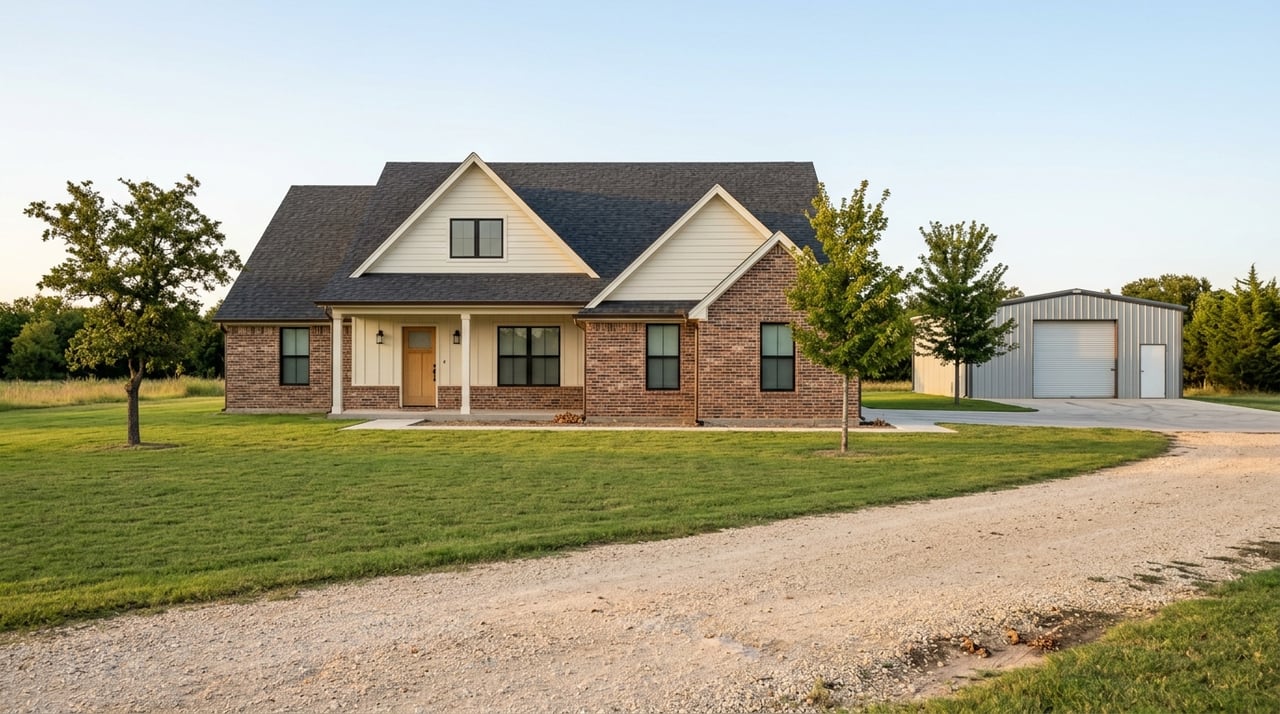
If you are selling a home on acreage near Madill, you are not just selling bedrooms and bathrooms. You are also selling land, access, utility systems, outbuildings, and the way the property can actually be used. That can feel like a lot to organize, but the right plan can help you price more accurately, market more clearly, and build buyer confidence from day one. Let’s dive in.
Why acreage sales work differently
A home on acreage in the Madill area is usually evaluated more like a land-and-improvement property than a standard subdivision home. In practical terms, buyers often look at the house, the land, and the supporting features as separate parts of the value.
That matters in Marshall County, where details like access, fencing, well and septic systems, floodplain exposure, and outbuilding condition can shape both price and buyer interest. A beautiful interior still matters, but on rural property, it is only part of the story.
Madill’s location near Lake Texoma also affects the buyer pool. Some buyers want room to spread out, while others are drawn to acreage because of recreation, outdoor use, or proximity to lake areas and wildlife land.
Price the land and improvements separately
One of the biggest mistakes sellers make is comparing their property only to homes in town. Acreage near Madill should be compared to similar-use properties, especially when the land itself adds meaningful value.
Oklahoma treats agricultural land and agricultural improvements differently for valuation purposes. State rules use a use-value approach for agricultural land, while nonresidential improvements such as barns, shops, and similar structures are valued separately with depreciation considered.
For you as a seller, that means pricing should account for at least three moving pieces:
- The house itself
- The acreage and how it functions
- The outbuildings and site improvements
If your property includes pasture, hay ground, woods, ponds, fencing, or multiple usable areas, those features should be considered carefully instead of rolled into a rough price per square foot. Buyers looking at rural property want to understand exactly what they are getting.
Marshall County land data can also provide context, but it should be used carefully. OSU’s county land-value table shows Marshall County agricultural land averaging $2,771 per acre in the latest available row, but that data reflects larger agricultural tracts and should be treated as a directional benchmark, not a direct pricing formula for a home on acreage.
Confirm the basics before you list
Before your home goes live, make sure the core property facts are clear and easy to verify. Rural listings often involve more questions than in-town homes, so getting ahead of those questions can save time later.
The Marshall County Assessor’s office offers an online real property search, which can help confirm recorded acreage, parcel details, and tax record information. That is a smart place to start if you want to make sure your listing details match the public record.
You should also gather the documents buyers commonly ask for early in the process. That includes:
- The deed or full legal description
- Any current survey
- Well records, if available
- Septic records and inspection documents, if available
- Permits for additions or outbuildings
- Information about easements or shared access
This step matters because rural contracts often need more detail than a standard neighborhood sale. Oklahoma forms for agricultural or recreational land reflect that reality.
Prepare the land, not just the house
On acreage, first impressions start before buyers reach the front door. The driveway, gate, pasture, tree lines, and overall readability of the land all affect how buyers feel when they arrive.
Simple outdoor prep can make a major difference. If buyers cannot tell where the usable land begins, where the boundaries appear to run, or whether the property is easy to access, they may hesitate even if the house shows well.
Before photos and showings, focus on visible improvements such as:
- Mowing tall grass
- Clearing brush around key areas
- Repairing gates and fencing
- Making driveways passable and tidy
- Improving drainage trouble spots, when possible
- Making major boundaries and access points easier to identify
Outbuildings also deserve attention. Barns, shops, sheds, and pens should be cleaned out, photographed clearly, and described accurately so buyers understand both condition and usefulness.
Gather well and septic records early
If your property has a private well or septic system, buyers will likely ask about both. Having records ready can make your listing feel more complete and reduce uncertainty.
For septic systems, OSU recommends obtaining the final inspection report from DEQ records when possible, locating tanks and drain-field components, and inspecting the system when the ground is dry. Even if you do not have every record, it helps to gather what you can before you list.
For private wells, OSU recommends annual testing for nitrates, total dissolved solids, pH, and fecal coliform or E. coli. Because private wells are not required to meet federal drinking-water standards, current information can be especially helpful to buyers evaluating a rural property.
If you know the location of the wellhead, tank, lateral lines, or septic components, make that information easy to share. Clear answers can help buyers feel more comfortable moving forward.
Check floodplain, access, and use issues
Some acreage near Madill includes creeks, ponds, drainage areas, or land influenced by the Lake Texoma area. Because Marshall County has a floodplain ordinance that adopts Flood Insurance Rate Map panels by reference, it is wise to check floodplain status before marketing your property.
This does not mean a property in or near a floodplain cannot sell. It does mean buyers will want to understand how floodplain status may affect use, financing, insurance, or future plans.
Access is another major issue on rural property. Buyers want to know whether the property has clear legal and practical access, whether any part is shared in common, and whether easements affect use. If there is anything unusual about ingress, egress, or shared drives, bring that into the conversation early.
You should also think about how the land functions today. If the acreage supports grazing, hay production, woods use, wildlife habitat, or recreation, that should be documented and explained accurately.
Know which Oklahoma disclosures apply
Disclosure requirements matter on any home sale, but they are especially important on acreage because there are often more systems, structures, and land-related details involved. In Oklahoma, the Residential Property Condition Disclosure Statement is required for sellers of 1- and 2-unit residential dwellings and must be delivered before an offer is accepted.
If you learn about a new defect before acceptance, an amended disclosure is required. The current form asks about items that often come up on rural property, including gas supply, propane tank ownership, additions made without required permits, previous foundation repairs, easements, shared property interests, and government notices.
If your home was built before 1978, lead-based paint disclosure rules also apply. Oklahoma’s health department notes that buyers must receive the EPA pamphlet and any known lead-based-paint information before they are obligated under contract.
Rural transactions can also require different forms or additional addenda depending on the property type and seller situation. That is one reason it helps to work with an agent who is comfortable handling acreage and land-related details.
Market the acreage clearly
Acreage listings near Madill need more than standard front-yard photos. Buyers want to see how the land lays out, what improvements are present, and how the property can be used.
That is where thoughtful marketing can make a real difference. Aerial photography, parcel maps, and labeled images help buyers understand roads, tree lines, ponds, barns, shops, pasture, and house placement much faster than a basic photo set.
A strong rural feature sheet should clearly explain:
- Total acreage
- Land use, such as pasture, hay ground, woods, or mixed use
- Outbuildings and site improvements
- Water source and septic information
- Fuel sources, such as propane or other systems
- Access points and easements, if relevant
- Recreational features like ponds, wildlife habitat, or lake-area appeal
In the Madill market, this matters even more because buyers may be shopping for a mix of lifestyle goals. Some want a primary residence with room to grow. Others may be interested in outdoor use, privacy, or a property that benefits from being near Lake Texoma recreation.
Help buyers picture the property’s use
Rural buyers often make decisions based on function. They want to know whether the property will support the way they plan to live, work, or spend time outdoors.
That means your listing should answer practical questions clearly. Is there room for equipment? Are fences usable? Is there a shop for projects or storage? Does the land appear manageable? Are there ponds, woods, or open areas that create flexibility?
The easier you make it for buyers to picture daily life on the property, the more likely they are to engage seriously. Clear presentation reduces guesswork, and less guesswork often leads to stronger interest.
A smart selling plan for Madill acreage
Selling a home on acreage near Madill takes more than a quick market estimate and a sign in the yard. You need a pricing strategy that respects the land and improvements separately, a prep plan that makes the property easy to understand, and marketing that reaches buyers looking for more than a standard house.
When you combine good records, honest disclosures, strong visuals, and a clear story about how the property functions, you put yourself in a much better position. If you want expert guidance on pricing, preparing, and marketing acreage in south-central Oklahoma, connect with Makenzie Mcelroy for personalized help.
FAQs
How should you price a home on acreage near Madill?
- Price should consider the house, the acreage, and any outbuildings or site improvements separately, rather than relying only on in-town home comparisons.
What should you clean up before showing acreage property in Marshall County?
- Focus on mowing, brush clearing, gate and fence repair, driveway condition, drainage trouble spots, and making the land layout easier for buyers to see.
What records should you gather before selling rural property near Madill?
- Try to collect the deed or legal description, survey, well and septic records, permits for additions or outbuildings, and any information about easements or shared access.
Why does floodplain status matter for acreage near Madill?
- Floodplain status can affect how buyers view use, financing, insurance, and future plans, especially on land near creeks, ponds, drainage ways, or the Lake Texoma area.
What disclosures apply when selling a house on acreage in Oklahoma?
- Sellers of 1- and 2-unit residential dwellings generally must provide Oklahoma’s Residential Property Condition Disclosure Statement before accepting an offer, and pre-1978 homes also require lead-based paint disclosure.
How should you market acreage property near Lake Texoma and Madill?
- Strong marketing usually includes professional photos, drone images, parcel maps, and clear descriptions of land use, utilities, outbuildings, access, and recreational features.